Categories
Kiln Doors
The basic model of the doors we supply was developed back in the 1980s and has been continuously refined since then. It is a relatively simple construction with excellent insulation properties and high strength.
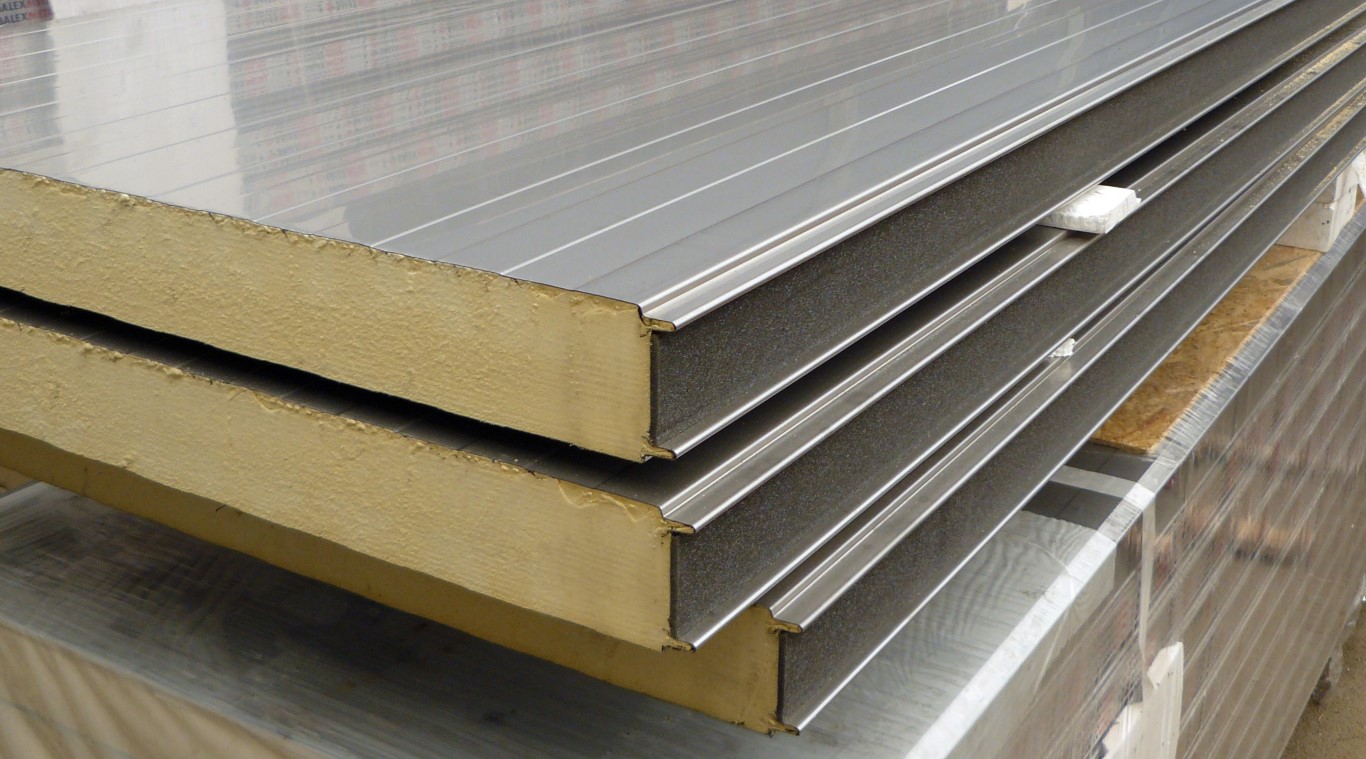
The panels we usually use have PIR (Polyisocyanurate) insulation. This provides better insulation than PUR (Polyurethane) in terms of thermal performance, fire properties, compressive strength, environmental impact, and temperature resistance (PIR works up to 120°C, compared to 80°C for PUR). Our PIR panels reduce airborne noise by approximately 25–30 dB. For greater soundproofing needs, we can also supply panels with mineral wool insulation, which achieves noise reduction of about 35–40 dB.
We use sandwich panels in thicknesses of 80 or 100 mm. On the outside, we attach door steel that is screwed together and fastened to the panels using stainless facade screws from the inside, through the panels, and into the external door steel. On the inside, all joint surfaces are sealed with a carefully selected sealant that performs well in lumber kilns for many years.